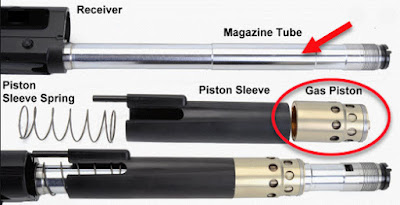
The Winchester SX4 is my Go To shotgun for everything - clays, doves, ducks, geese, pheasants, whatever. It is an awesome firearm. The drawback? There are multiple moving parts and a few of them like to collect carbon. And this carbon sticks as if it were put on those parts with super glue! Specifically, the magazine tube and the gas piston are the main carbon collectors. Those parts come out more black than silver & gold. The inner components of an SX3 / SX4 with highlights where carbon will form So what is my trick for cleaning those bits? I drop the gas piston into my Hornady sonic cleaner. Inside the cleaner I put in about a cup of Hornady's One Shot Sonic Clean Solution for gun parts, add some DI water, a couple squirts of Dawn liquid dish soap, and then top it off with a dash or two of the citrus version of Dr. Bronner's pure castile liquid soap. I have found that the citrus Dr. Bronner's is awesome at removing grease and oil....
First, you need to read the post immediately before this one to understand why I had to take my Winchester SX4 shotgun apart - all the way apart - specifically the trigger assembly. Second, my bad. I had neglected to clean the gun after returning from last October's pheasant trip. I had about one bale of grass seed inside that gun, which in the end, may have kept the #8 pellet from getting out on its own. Shame. Finally, I did not give up. I watched four different YouTube videos on how to disassemble and reassemble the trigger group. Sadly, no one did the SX4, only the previous version, the SX3. Close enough. Why did it take 4 videos? Because no one explained HOW the damn sear goes back in. Everyone either ASSUMED we all know how OR in two cases, the reassembly process was out of the camera frame. Aggravating! The key, and this is more for me to remember, was on the fourth video, the author said, "The sear kinda slides down int...
Veterans Day, originally called Armistice Day, came about because...(source: US Department of Veterans Affairs) World War I – known at the time as “The Great War” - officially ended when the Treaty of Versailles was signed on June 28, 1919, in the Palace of Versailles outside the town of Versailles, France. However, fighting ceased seven months earlier when an armistice, or temporary cessation of hostilities, between the Allied nations and Germany went into effect on the eleventh hour of the eleventh day of the eleventh month. For that reason, November 11, 1918, is generally regarded as the end of “the war to end all wars.” Armistice Day was primarily a day set aside to honor veterans of World War I, but in 1954, after World War II had required the greatest mobilization of soldiers, sailors, Marines and airmen in the Nation’s history; after American forces had fought aggression in Korea, the 83rd Congress, at the urging of the veterans service organizations, amended the Act of 1938...




Comments
Post a Comment